How To Guides, Reduce, Refill & Reuse, Top Tips Posted — 24 November 2023
Plastic Greenwashing: How you can avoid it
Reducing plastic use is a big topic, and many of us look for businesses that are seen to be acting on it. It’s big selling point to be environmentally friendly, and greenwashing can lead us into buying products which may not do exactly what they say.
…but what is Greenwashing?
Greenwashing is a kind of false marketing. Companies can make their products seem more appealing by advertising them as environmentally friendly. There are so many buzz words used, like ‘eco’, ‘natural’, ‘sustainable’; it’s hard to know what is fact and what is false. Greenwashing is such a common issue, especially around packaging. So how do you spot it?

Don’t be fooled by colour, graphics or ‘eco’ wording
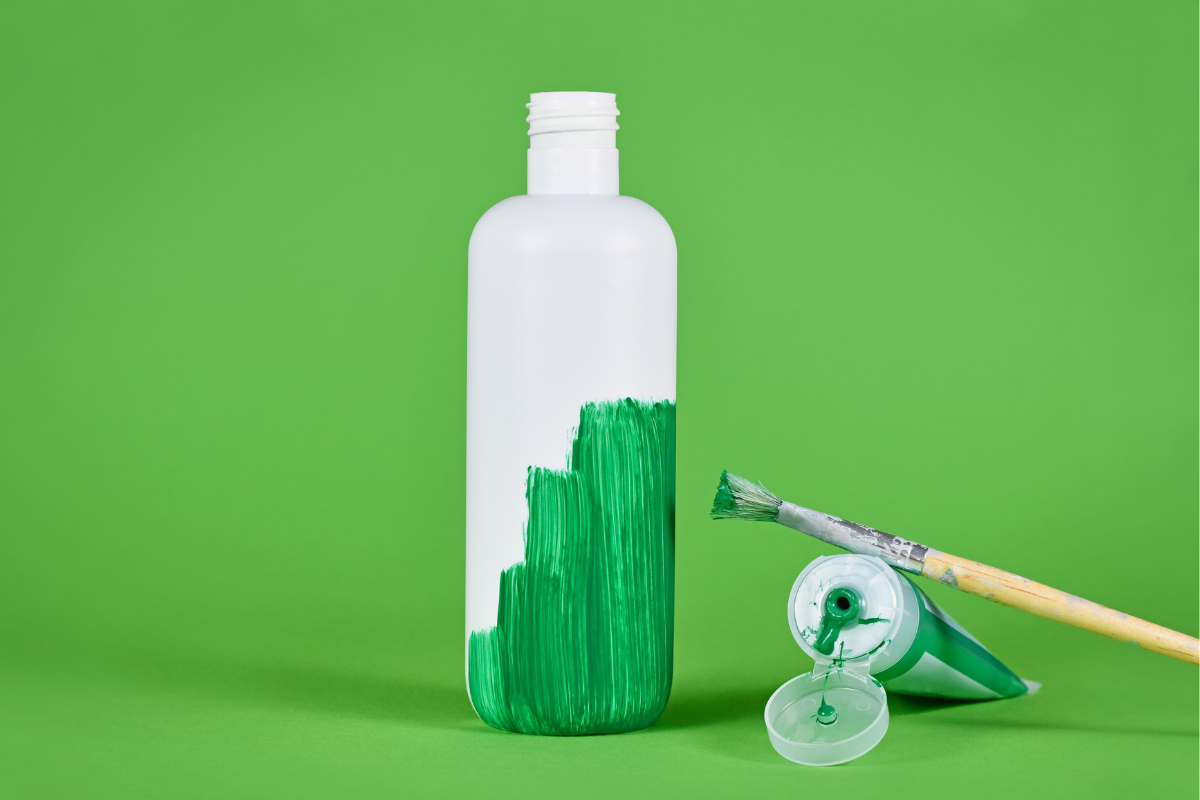
Packaging coloured green, or with depictions of nature or plants does not mean that product is environmentally friendly. Read labels, think about what the product is made of, and make up your own mind on whether it is or not, and don’t let clever marketing tell you otherwise.
% less plastic
This is not automatically a better option. Stop and challenge before you buy…how much less plastic? How easily can it be recycled now compared to the original product? Watch out for ‘NEW! % less plastic’ where a widely recyclable hard plastic, has been replaced by a soft plastic. Soft plastics cannot be recycled through household collections, and much of it will end up in landfill, incinerated or polluting our communities.
Recycled plastics
Many companies are now promoting their % recycled plastic products. Recycled plastics are better than new, virgin plastics. However, most plastics can only be mechanically recycled 2-3 times before they are too low grade to be recycled any further. Be wary of products labelled that they are made with ‘ocean plastic’ too. Selling any recycled plastic back again as a single-use product, isn’t a magic bullet for the plastic pollution crisis.
Bio-Plastics
Plant-based? bio-plastic? bio-based? degradable? bio-degradable? These words are used so often in marketing, it’s a minefield. A bio-plastic is a type of plastic that is not derived from petroleum, and can have a lower carbon footprint then petroleum-based plastics. But bio-based plastics are chemically identical to regular plastics. They can complicate our already stretched recycling systems, and there needs to be more research into how these products breakdown in in our environment. In short, they are not the answer to plastic pollution.
Check out our video, or our blog on bio-plastics to find out more.
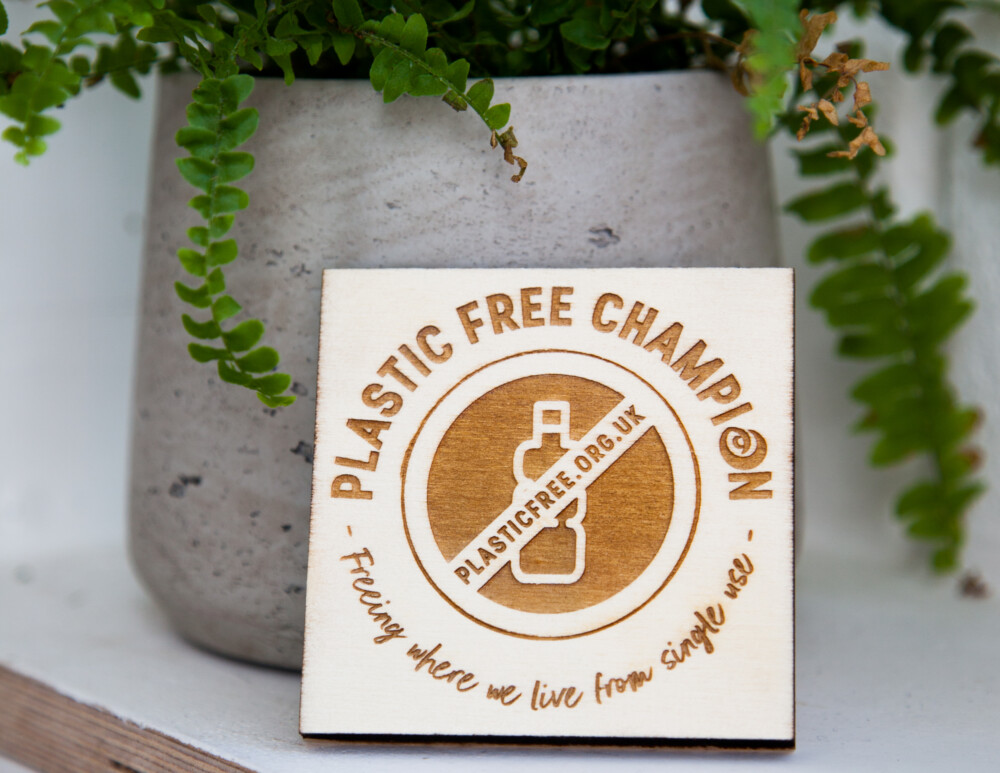
Support local businesses: look out for our Plastic Free Champions
Small local businesses are less likely to engage in large scale greenwashing, so support your local businesses this Christmas, and look out for the Plastic Free Champion logo. There are over 5,500 of them in the UK, all leading the way to industry change. Which leads us to …
Your power as a consumer
See obvious greenwashing or excessive plastic use? Let the company know what you think. As consumers, we can have great power in driving industry change by letting companies know we care about plastic .
In summary, any plastic which is being re-sold as a single-use plastic, no matter what it’s made from, isn’t going to be helping us work towards a circular economy.
Want to reduce your plastic and kick start your plastic free journey this Christmas? Sign up and receive your action plan >> HERE
Latest News & Events
Other ways to support
Plastic Free Schools
We urgently need your help to fight plastic pollution, protect the ocean
and save wildlife.

Join Surfers Against Sewage
The more members we have, the louder our voice becomes and the more attention we can demand from government and industry.

Fundraise for us
When you sign up to a challenge event or host an event in aid of SAS, not only will YOU be saving our oceans, but you also get to have lots of fun while doing it!