
Campaign News, Community Cleans, Plastic Pollution Posted — 7 August 2026
Nurdle Spill hits the North East Coast
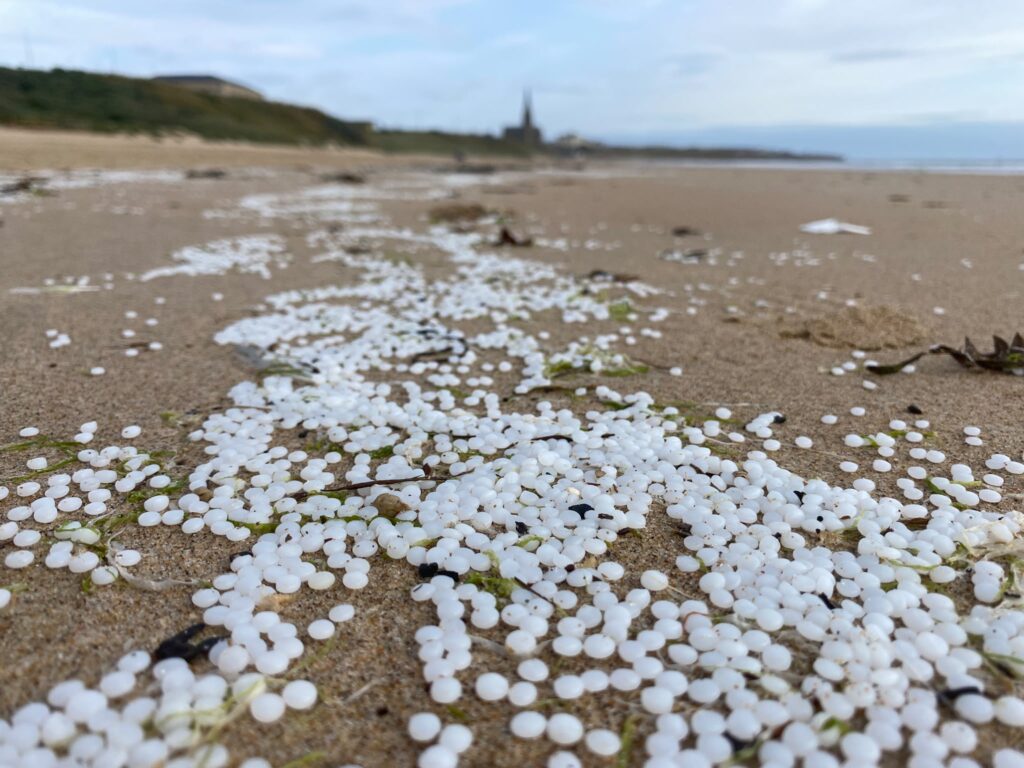
On 19th July there was a spill of Plastic Pellets into the Port of Tyne which is now affecting the coastline between South Shields, Northumberland and Sunderland. The spill was caused by a maritime collision at the Port of Tyne on 19th July 2026, when the vessel Wind Orca struck the berthed container ship BG Orange while leaving dock. The impact damaged several shipping containers, releasing an estimated 1 BILLION plastic pellets into the River Tyne and the North Sea.
Nurdles, the pre-production plastic pellets used in manufacturing, are a major source of marine plastic pollution. Once released into the environment they are extremely difficult to recover, can persist for decades, and pose a serious threat to marine ecosystems through ingestion by wildlife and the transport of harmful pollutants.
Local communities are mobilising and clean up efforts are underway. Accounts provided by local residents, our volunteers and elected representatives demonstrate both the scale of the contamination and the strength of public concern.
This incident demands an urgent response. While the immediate priority must be containment and recovery of spilled material, it should also serve as a catalyst for stronger action to address the wider issue of plastic pellet pollution and microplastic contamination across the UK.
What needs to happen next
-
Treat the Incident as a Serious Environmental Pollution Event
SAS believes this spill should be treated with the same urgency and coordination afforded to other significant marine pollution incidents.
While nurdles do not create the immediate visible impacts associated with oil contamination, their long-term environmental consequences can be equally severe. Delay in containment and recovery significantly reduces the likelihood of successful clean-up and increases the volume of material entering the wider marine environment.
-
Immediate Government-Led Response
We call on the Environment Agency, Maritime and Coastguard Agency, local authorities and relevant government departments to:
- Deploy all available resources to assess the extent of contamination.
- Establish a coordinated incident response structure.
- Support rapid shoreline recovery operations before further tidal dispersal occurs.
- Provide clear and regular public updates on risks, clean-up activities and environmental monitoring.
- Ensure sufficient funding is available for response and restoration efforts.
-
Support and Coordinate Community Action
The response must recognise local communities as an asset rather than a bystander.
Northeast residents have demonstrated a strong commitment to protecting their coastline and many are already participating in recovery efforts. Authorities should:
- Provide clear guidance on safe collection methods.
- Supply appropriate equipment and personal protective equipment where necessary.
- Establish managed volunteer programmes.
- Work directly with community groups, including Surfers Against Sewage chapters and other environmental organisations.
- Create routes for volunteers to report contamination hotspots.
-
Polluter Accountability
The organisation responsible for the release must be identified and held accountable.
SAS calls for:
- A full investigation into the source and cause of the spill.
- Publication of findings and lessons learned.
- Application of the polluter pays principle.
- Recovery of clean-up, monitoring and restoration costs from responsible parties where appropriate.
- Review and strengthening of pellet handling and transport regulations to prevent future incidents.
-
Long-Term Environmental Monitoring
The impact of this incident will continue long after visible contamination declines.
Authorities should implement:
- Ongoing monitoring of affected beaches.
- Assessment of impacts on marine wildlife and habitats.
- Data collection on the movement and persistence of nurdles in the marine environment.
- Public reporting of environmental outcomes and recovery progress.
 If you spot large amount of plastic pellet pollution, please contact your local Authority and the landowner, as well as reporting to the Government’s Pollution Hotline on 0800 80 70 60 or online at www.gov.uk/report-environmental-problem, and please seek local authority guidance before touching any pellet pollution.
Latest News & Events
Other ways to support
Plastic Free Schools
We urgently need your help to fight plastic pollution, protect the ocean
and save wildlife.

Join Surfers Against Sewage
The more members we have, the louder our voice becomes and the more attention we can demand from government and industry.
Fundraise for us
When you sign up to a challenge event or host an event in aid of SAS, not only will YOU be saving our oceans, but you also get to have lots of fun while doing it!