Challenging Government, Plastic Pollution, Stats & Research Posted — 24 October 2024
A Scary Plastic Story

Plastics are polymers, very long chains of molecules, Polymers are found in nature, like DNA.
We’ve been using polymers such as rubber & cellulose for hundreds of years, nothing to scream about. However, it wasn’t until 1907 that the first mad-made synthetic plastic called Bakelite was invented. The first polymer to be made not from plants or animals, but from fossil fuels. And here’s where the scary part of the story begins…
A MONSTER is born
In the 1950s, big oil companies identified a way to ensure a growing demand for plastic, by marketing it as disposable. This is the cause of the plastic problem, selling an incredibly durable material at low cost and in BIG volumes.
Today, 1 in 10 barrels of oil are used to make plastic. Plastic and climate change are intrinsically linked. From production to landfill, incineration and even recycling, at every stage plastic creates carbon emissions.
In 2023, Surfers Against Sewage found that just 12 companies were responsible for 70% of branded plastic pollution found in our communities. Coca-Cola being the top offender 4 years running.
Gruesome global stats
The scale of global plastic production is staggering. In 1950, the world produced just two million tonnes. By 2019, it was 460 million tonnes…and it’s still increasing.
The amount of plastic waste entering aquatic ecosystems could nearly triple to a projected 23-37 million tons per year by 2040 – that’s 3 MILLION double decker buses a YEAR.
With this scale of production, our waste systems haven’t been able to cope. We cannot recycle or incinerate our way of out the problem – Only 9% of plastic ever made has ever been recycled.

Nightmare Nanoplastics
The big problem with plastic is also why it’s so useful. It doesn’t naturally biodegrade. Ever.
It does break down but incredibly slowly, and into smaller and smaller pieces called Microplastics. These can break down into EVEN smaller Nanoplastics. Nanoplastics are 1 millioneth of a mm. That’s mind blowingly small – 100,000 times smaller than a human hair.
Micro and Nano plastics stick around in our environment indefinitely–and have been found in water, air, soil and living beings. And not just marine life, but in us. In human blood, in brain and lung tissue, in our reproductive systems. We eat the equivalent of a credit card’s worth of plastic every week. No-one fully knows yet what impact that is having.
Micro and Nano plastics also act as carriers for pollutants, chemicals, and disease-causing bacteria present in the environment.
Ocean under threat
The ocean bears the brunt of the plastic crisis, and for many creatures it’s a real-life horror film – microplastics and nano plastics, ingestion and entanglement are all a nightmare for marine life.
Entangled animals may no longer be able to acquire food and avoid predators, they suffer from wounds, infection and exhaustion. A study in West Cornwall found 3-5% of grey seals were entangled in plastic.
Plastic is so persistent is has entered the food chain. Baleen whales are estimated to consume between 200,000 and 10 million microplastic particles indirectly through contaminated prey each day.
All seven sea turtle species have been found to have ingested plastic, in every region of the world. And a study found one in three sea birds have plastic in their stomachs.
Plastic is a valuable material. Durable, mouldable, and used to make countless life-saving and essential products and equipment. But thanks to big business endlessly pushing it on us, we’re caught in a single-use plastic trap that’s choking the planet.
If it’s on our streets today, it’s in our rivers tomorrow, and the ocean forever.
We’re not taking it anymore … join us as we demand an end to plastic pollution.
Help us fight back against single-use plastic

Latest News & Events
Other ways to support

Plastic Free Schools
We urgently need your help to fight plastic pollution, protect the ocean
and save wildlife.
Join Surfers Against Sewage
The more members we have, the louder our voice becomes and the more attention we can demand from government and industry.
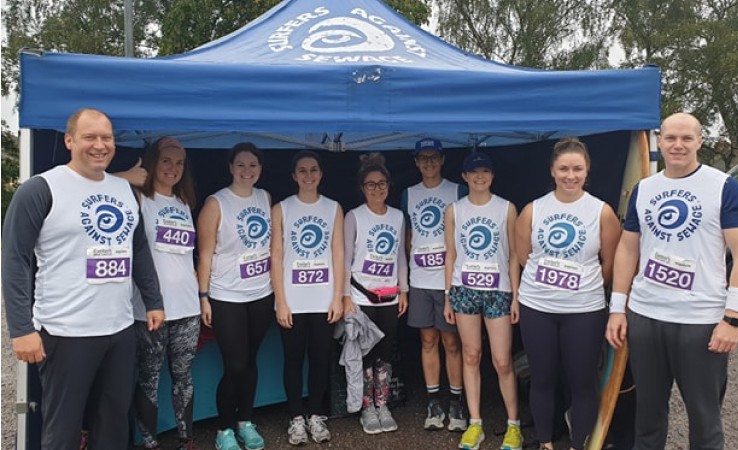
Fundraise for us
When you sign up to a challenge event or host an event in aid of SAS, not only will YOU be saving our oceans, but you also get to have lots of fun while doing it!